










When Do Cats Stop Growing? What to Expect Over the Years?

When Do Cats Stop Growing? What to Expect Over the Years?
Understanding Cat Body Language and Emotions

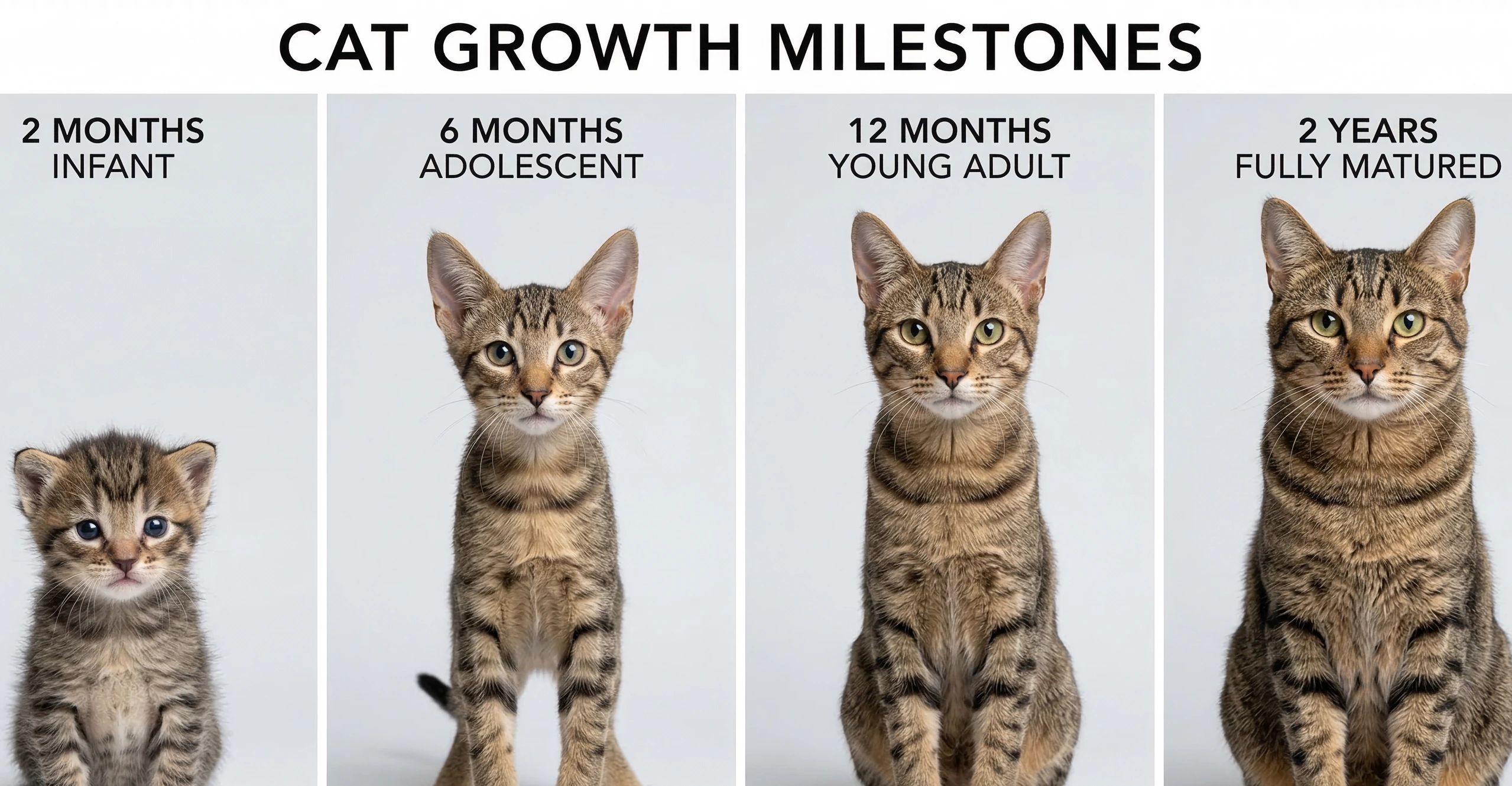
Most domestic cats stop growing in height and length by 12 months of age. However, they continue to develop muscle mass and fill out their chest until they are 18 to 24 months old. Larger breeds, such as Maine Coons, may experience extended growth periods and not reach full maturity until 3 to 4 years of age.

Feline growth is a multi-stage physiological process that involves both skeletal expansion and muscular development. While a cat may reach its adult height by its first birthday, its structural development is not fully complete.

During the first year, a kitten’s energy is directed primarily toward bone growth and establishing a foundational physical frame. Once skeletal maturity is reached, the body shifts focus toward increasing muscle density and stabilizing weight.

A cat’s final size is influenced by several factors, including genetics, breed profile, nutritional intake during the primary growth phases, and overall health status during kittenhood.

Feline Growth Stages and Milestones

Newborn to 2 Months (Neonatal Stage)

During the first eight weeks, kittens experience their most vulnerable and rapid developmental phase. Eyes and ear canals open, and motor skills progress from basic wobbling to coordinated walking. Deciduous (baby) teeth erupt, and their primary biological focus is nursing and sleeping to support rapid cellular growth.

2 to 6 Months (Rapid Growth Phase)

This period is marked by significant physical elongation and heightened caloric needs. Deciduous teeth are replaced by permanent adult teeth, a process that usually completes around six months. Cats in this stage often appear disproportionate, with elongated legs and oversized paws, as their skeletal framework expands rapidly.

6 to 12 Months (Adolescent Stage)

Growth begins to decelerate, though it does not stop entirely. The skeletal structure fortifies, and early muscle development begins. Most cats reach their near-adult height during this window and typically reach sexual maturity between five and nine months of age.

1 to 2 Years (Physical Maturation)

While upward growth generally ceases around the 12-month mark, the body continues to mature. The chest cavity broadens, and overall muscle mass increases. The cat transitions from a slender, adolescent frame to a sturdy, well-proportioned adult physique. Emotional and behavioral maturity also stabilizes by the end of the second year.

Signs Your Cat Has Reached Full Size

When Do Cats Stop Growing? What to Expect Over the Years?

Most domestic cats stop growing in height and length by 12 months of age. However, they continue to develop muscle mass and fill out their chest until they are 18 to 24 months old. Larger breeds, such as Maine Coons, may experience extended growth periods and not reach full maturity until 3 to 4 years of age.
Feline growth is a multi-stage physiological process that involves both skeletal expansion and muscular development. While a cat may reach its adult height by its first birthday, its structural development is not fully complete.
During the first year, a kitten's energy is directed primarily toward bone growth and establishing a foundational physical frame. Once skeletal maturity is reached, the body shifts focus toward increasing muscle density and stabilizing weight.
A cat’s final size is influenced by several factors, including genetics, breed profile, nutritional intake during the primary growth phases, and overall health status during kittenhood.
Feline Growth Stages and Milestones
Newborn to 2 Months (Neonatal Stage)
During the first eight weeks, kittens experience their most vulnerable and rapid developmental phase. Eyes and ear canals open, and motor skills progress from basic wobbling to coordinated walking. Deciduous (baby) teeth erupt, and their primary biological focus is nursing and sleeping to support rapid cellular growth.
2 to 6 Months (Rapid Growth Phase)
This period is marked by significant physical elongation and heightened caloric needs. Deciduous teeth are replaced by permanent adult teeth, a process that usually completes around six months. Cats in this stage often appear disproportionate, with elongated legs and oversized paws, as their skeletal framework expands rapidly.
6 to 12 Months (Adolescent Stage)
Growth begins to decelerate, though it does not stop entirely. The skeletal structure fortifies, and early muscle development begins. Most cats reach their near-adult height during this window and typically reach sexual maturity between five and nine months of age.
1 to 2 Years (Physical Maturation)
While upward growth generally ceases around the 12-month mark, the body continues to mature. The chest cavity broadens, and overall muscle mass increases. The cat transitions from a slender, adolescent frame to a sturdy, well-proportioned adult physique. Emotional and behavioral maturity also stabilizes by the end of the second year.
Signs Your Cat Has Reached Full Size

Stable Body Weight
A fully grown cat will maintain a consistent body weight. Unlike the rapid weight gain observed during the first six months, an adult cat's weight should remain steady, provided they are receiving appropriate nutrition and exercise.
Balanced Proportions
The disproportionate, lanky appearance characteristic of the adolescent phase resolves. The chest becomes fuller, muscles are clearly defined, and the overall frame appears sturdy and balanced.
Mature Facial Features
The rounded, soft features typical of a kitten transition into a more defined and structurally mature facial shape, corresponding with the finalization of their cranial bone structure.
Risks and Side Effects During Growth
Immediate Risks
Nutritional Deficiencies: Inadequate diet can lead to stunted skeletal development and weakened immune function.
Gastrointestinal Distress: Sudden dietary changes or overfeeding can cause severe digestive upset in developing kittens.
Long-Term Risks
Joint and Bone Deformities: Calcium and phosphorus imbalances during the rapid growth phase can cause lifelong orthopedic issues.
Adolescent Obesity: Overfeeding after the rapid growth phase ends (post-12 months) can lead to early-onset obesity.
Healthy Growth Guidelines / Usage Guide

Recommended Nutrition by Age
Providing the correct caloric and nutritional balance is critical for steady, healthy growth.
Age Group
Dietary Requirement
Feeding Frequency
0–4 Weeks
Mother's milk or kitten milk replacer
Every 2–4 hours
4–8 Weeks
Wet kitten food mixed with formula
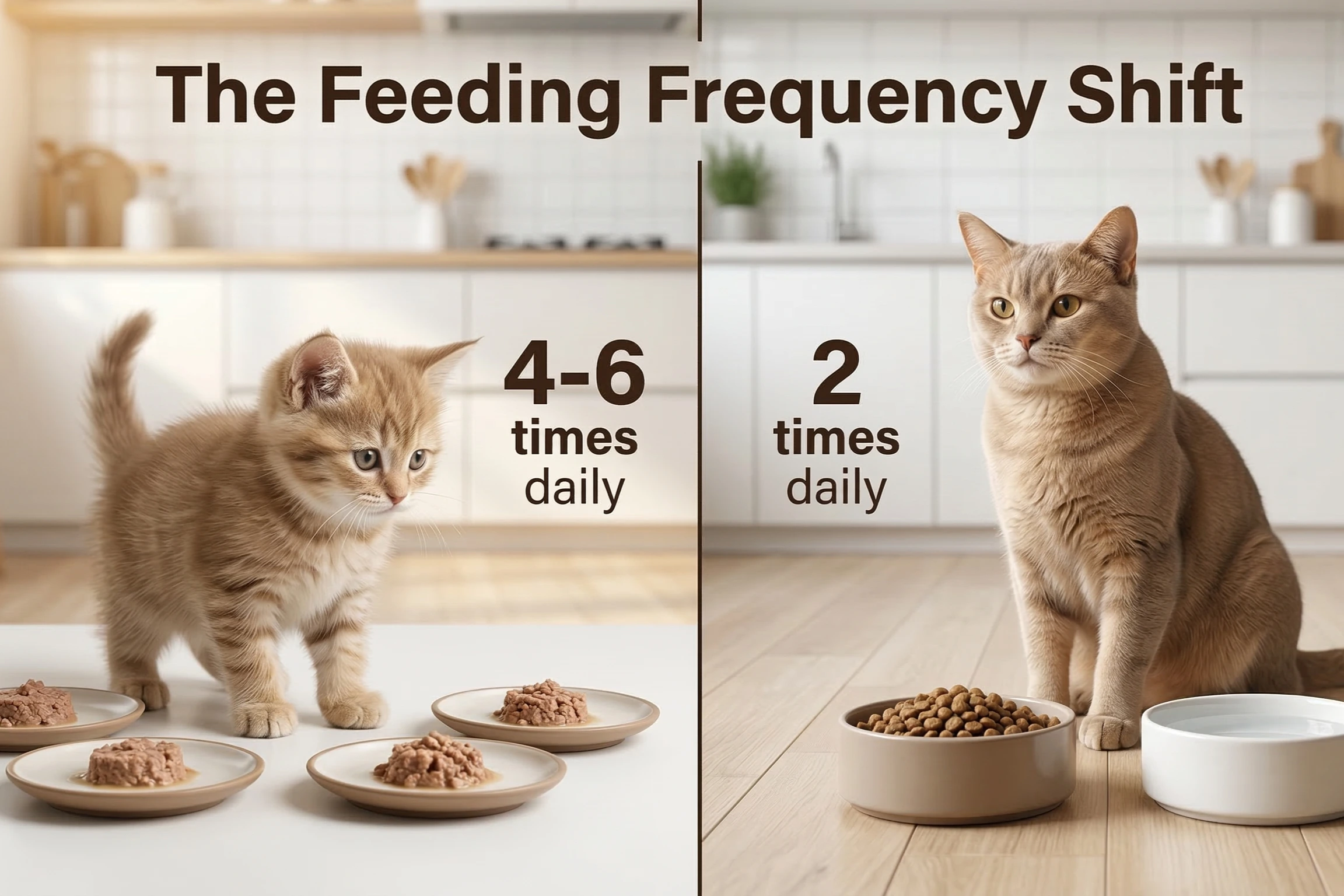
4–6 times daily
2–12 Months
High-protein kitten-specific kibble/wet food
3–4 times daily
12+ Months
Adult maintenance formula
2 times daily

Weight Monitoring Instructions
Weigh your growing cat bi-weekly using a reliable digital scale. Document the progress to ensure they are following a steady growth curve without sudden spikes or drops in weight.
When to Contact a Veterinarian
Monitor your growing cat closely and consult a veterinary professional if you observe any of the following:
Sudden or unexplained weight loss.
Failure to gain weight over a two-week period during the first six months.
Lethargy or an unwillingness to play or move.
Visible limping, joint stiffness, or signs of pain when walking.
Delayed milestones, such as retained baby teeth after six months of age.
Frequently Asked Questions
Do male cats grow larger than female cats?
Yes, in most domestic breeds, male cats typically develop a larger skeletal frame, broader heads, and a higher overall body mass compared to female cats of the same breed.
Will neutering or spaying stunt my cat’s growth?
No. In fact, altering a cat before they reach sexual maturity can cause the growth plates in their bones to close slightly later, occasionally resulting in a slightly taller cat.
How big will my mixed-breed kitten get?
While exact sizing is difficult to predict, observing the size of their paws and monitoring their weight at the 16-week mark can provide a general estimate. Most mixed-breed cats reach 8 to 11 pounds.
When do cats become emotionally mature?
While sexual maturity occurs between five and nine months, cognitive and emotional maturity typically aligns with physical maturation, fully stabilizing around two years of age.

Stable Body Weight

A fully grown cat will maintain a consistent body weight. Unlike the rapid weight gain observed during the first six months, an adult cat’s weight should remain steady, provided they are receiving appropriate nutrition and exercise.

Balanced Proportions

The disproportionate, lanky appearance characteristic of the adolescent phase resolves. The chest becomes fuller, muscles are clearly defined, and the overall frame appears sturdy and balanced.

Mature Facial Features

The rounded, soft features typical of a kitten transition into a more defined and structurally mature facial shape, corresponding with the finalization of their cranial bone structure.

Risks and Side Effects During Growth

Immediate Risks

  • Nutritional Deficiencies: Inadequate diet can lead to stunted skeletal development and weakened immune function.
  • Gastrointestinal Distress: Sudden dietary changes or overfeeding can cause severe digestive upset in developing kittens.

Long-Term Risks

  • Joint and Bone Deformities: Calcium and phosphorus imbalances during the rapid growth phase can cause lifelong orthopedic issues.
  • Adolescent Obesity: Overfeeding after the rapid growth phase ends (post-12 months) can lead to early-onset obesity.

Healthy Growth Guidelines / Usage Guide

When Do Cats Stop Growing? What to Expect Over the Years?

Most domestic cats stop growing in height and length by 12 months of age. However, they continue to develop muscle mass and fill out their chest until they are 18 to 24 months old. Larger breeds, such as Maine Coons, may experience extended growth periods and not reach full maturity until 3 to 4 years of age.
Feline growth is a multi-stage physiological process that involves both skeletal expansion and muscular development. While a cat may reach its adult height by its first birthday, its structural development is not fully complete.
During the first year, a kitten's energy is directed primarily toward bone growth and establishing a foundational physical frame. Once skeletal maturity is reached, the body shifts focus toward increasing muscle density and stabilizing weight.
A cat’s final size is influenced by several factors, including genetics, breed profile, nutritional intake during the primary growth phases, and overall health status during kittenhood.
Feline Growth Stages and Milestones
Newborn to 2 Months (Neonatal Stage)
During the first eight weeks, kittens experience their most vulnerable and rapid developmental phase. Eyes and ear canals open, and motor skills progress from basic wobbling to coordinated walking. Deciduous (baby) teeth erupt, and their primary biological focus is nursing and sleeping to support rapid cellular growth.
2 to 6 Months (Rapid Growth Phase)
This period is marked by significant physical elongation and heightened caloric needs. Deciduous teeth are replaced by permanent adult teeth, a process that usually completes around six months. Cats in this stage often appear disproportionate, with elongated legs and oversized paws, as their skeletal framework expands rapidly.
6 to 12 Months (Adolescent Stage)
Growth begins to decelerate, though it does not stop entirely. The skeletal structure fortifies, and early muscle development begins. Most cats reach their near-adult height during this window and typically reach sexual maturity between five and nine months of age.
1 to 2 Years (Physical Maturation)
While upward growth generally ceases around the 12-month mark, the body continues to mature. The chest cavity broadens, and overall muscle mass increases. The cat transitions from a slender, adolescent frame to a sturdy, well-proportioned adult physique. Emotional and behavioral maturity also stabilizes by the end of the second year.
Signs Your Cat Has Reached Full Size

Stable Body Weight
A fully grown cat will maintain a consistent body weight. Unlike the rapid weight gain observed during the first six months, an adult cat's weight should remain steady, provided they are receiving appropriate nutrition and exercise.
Balanced Proportions
The disproportionate, lanky appearance characteristic of the adolescent phase resolves. The chest becomes fuller, muscles are clearly defined, and the overall frame appears sturdy and balanced.
Mature Facial Features
The rounded, soft features typical of a kitten transition into a more defined and structurally mature facial shape, corresponding with the finalization of their cranial bone structure.
Risks and Side Effects During Growth
Immediate Risks
Nutritional Deficiencies: Inadequate diet can lead to stunted skeletal development and weakened immune function.
Gastrointestinal Distress: Sudden dietary changes or overfeeding can cause severe digestive upset in developing kittens.
Long-Term Risks
Joint and Bone Deformities: Calcium and phosphorus imbalances during the rapid growth phase can cause lifelong orthopedic issues.
Adolescent Obesity: Overfeeding after the rapid growth phase ends (post-12 months) can lead to early-onset obesity.
Healthy Growth Guidelines / Usage Guide

Recommended Nutrition by Age
Providing the correct caloric and nutritional balance is critical for steady, healthy growth.
Age Group
Dietary Requirement
Feeding Frequency
0–4 Weeks
Mother's milk or kitten milk replacer
Every 2–4 hours
4–8 Weeks
Wet kitten food mixed with formula
4–6 times daily
2–12 Months
High-protein kitten-specific kibble/wet food
3–4 times daily
12+ Months
Adult maintenance formula
2 times daily

Weight Monitoring Instructions
Weigh your growing cat bi-weekly using a reliable digital scale. Document the progress to ensure they are following a steady growth curve without sudden spikes or drops in weight.
When to Contact a Veterinarian
Monitor your growing cat closely and consult a veterinary professional if you observe any of the following:
Sudden or unexplained weight loss.
Failure to gain weight over a two-week period during the first six months.
Lethargy or an unwillingness to play or move.
Visible limping, joint stiffness, or signs of pain when walking.
Delayed milestones, such as retained baby teeth after six months of age.
Frequently Asked Questions
Do male cats grow larger than female cats?
Yes, in most domestic breeds, male cats typically develop a larger skeletal frame, broader heads, and a higher overall body mass compared to female cats of the same breed.
Will neutering or spaying stunt my cat’s growth?
No. In fact, altering a cat before they reach sexual maturity can cause the growth plates in their bones to close slightly later, occasionally resulting in a slightly taller cat.
How big will my mixed-breed kitten get?
While exact sizing is difficult to predict, observing the size of their paws and monitoring their weight at the 16-week mark can provide a general estimate. Most mixed-breed cats reach 8 to 11 pounds.
When do cats become emotionally mature?
While sexual maturity occurs between five and nine months, cognitive and emotional maturity typically aligns with physical maturation, fully stabilizing around two years of age.

Recommended Nutrition by Age

Providing the correct caloric and nutritional balance is critical for steady, healthy growth.

Age GroupDietary RequirementFeeding Frequency
0–4 WeeksMother’s milk or kitten milk replacerEvery 2–4 hours
4–8 WeeksWet kitten food mixed with formula4–6 times daily
2–12 MonthsHigh-protein kitten-specific kibble/wet food3–4 times daily
12+ MonthsAdult maintenance formula2 times daily

Weight Monitoring Instructions

Weigh your growing cat bi-weekly using a reliable digital scale. Document the progress to ensure they are following a steady growth curve without sudden spikes or drops in weight.

When to Contact a Veterinarian

Monitor your growing cat closely and consult a veterinary professional if you observe any of the following:

  • Sudden or unexplained weight loss.
  • Failure to gain weight over a two-week period during the first six months.
  • Lethargy or an unwillingness to play or move.
  • Visible limping, joint stiffness, or signs of pain when walking.
  • Delayed milestones, such as retained baby teeth after six months of age.

Frequently Asked Questions

Do male cats grow larger than female cats?

Yes, in most domestic breeds, male cats typically develop a larger skeletal frame, broader heads, and a higher overall body mass compared to female cats of the same breed.

Will neutering or spaying stunt my cat’s growth?

No. In fact, altering a cat before they reach sexual maturity can cause the growth plates in their bones to close slightly later, occasionally resulting in a slightly taller cat.

How big will my mixed-breed kitten get?

While exact sizing is difficult to predict, observing the size of their paws and monitoring their weight at the 16-week mark can provide a general estimate. Most mixed-breed cats reach 8 to 11 pounds.

When do cats become emotionally mature?

While sexual maturity occurs between five and nine months, cognitive and emotional maturity typically aligns with physical maturation, fully stabilizing around two years of age.

Share :

Leave a Reply

Post Categories

Popular Post

Archives

Instagram

Email for newsletter