No products in the cart.


COPYRIGHT © PAWTICAL. ALL RIGHTS RESERVED.

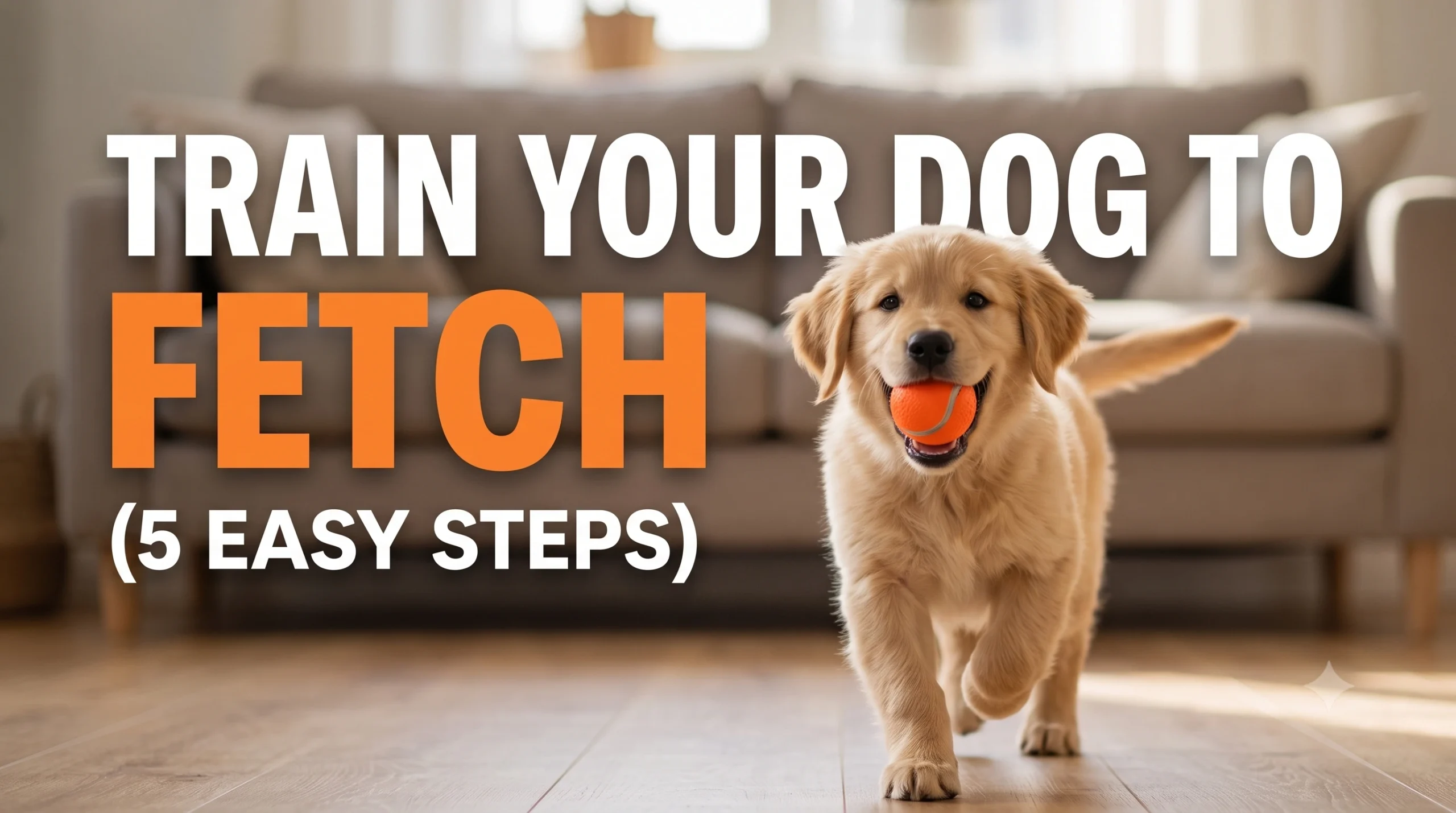
Most people assume fetch is something dogs just do naturally. You throw a ball. Your dog brings it back. The reality is often much different. You throw the object, your dog sprints ahead, grabs it, and then absolutely refuses to return.
You must break the behavior into five core steps to train your dog to retrieve items: building object interest, teaching a hold, introducing a fetch cue, rewarding the return, and mastering the drop command. Dogs learn this entire sequence best through positive reinforcement and short sessions.
Retrieving is a skill rather than an instant instinct for every dog. Fortunately, you can teach this skill to any dog. This step-by-step guide will walk you through the process clearly.
Before getting into the how, it helps to understand the why. Retrieve training isn’t just about the game itself; it builds focus, improves recall, strengthens your bond, and gives your dog a healthy outlet for energy. Fetch supports physical fitness, mental stimulation, and impulse control all at once, making it one of the most well-rounded activities you can do with your dog.
And the science backs up the training method too. When dogs receive praise or a treat for doing something right, their brains release dopamine, the neurotransmitter associated with pleasure and motivation, which makes the behavior more likely to stick over time.
This is why positive reinforcement works so well for retrieve training. You’re essentially rewiring your dog’s brain to associate bringing something back to you with a genuinely good feeling.
You have to build interest in everything, and if you want your dog to retrieve, it should be something they care about, because if it’s your car keys, cards, or socks that they don’t even care about, why would they even bother to retrieve them? So build interest by using some toys, soft things, and, preferably at the start, a light object, and once the interest builds up, they could become your personal helper.
Use things that they like, and just keep it out of their reach when you aren’t training but makes the dog more interested. Also, let your dog sniff and familiarize, and when they pick it up, give them a treat, it feels rewarding for them, and they start enjoying this.
This is the step most people skip, and it’s the reason so many dogs drop the toy three feet away from you instead of bringing it back properly.
Sit on the floor with your dog, hold the toy out, and when your dog goes to investigate it, click or praise and treat. At this stage, reward any interest in the toy, then gradually shape that interest into actually taking it in their mouth. Once they’re holding it confidently, introduce the word “hold.” Then slowly increase how long they hold it before rewarding. Short repetitions beat long ones every single time.
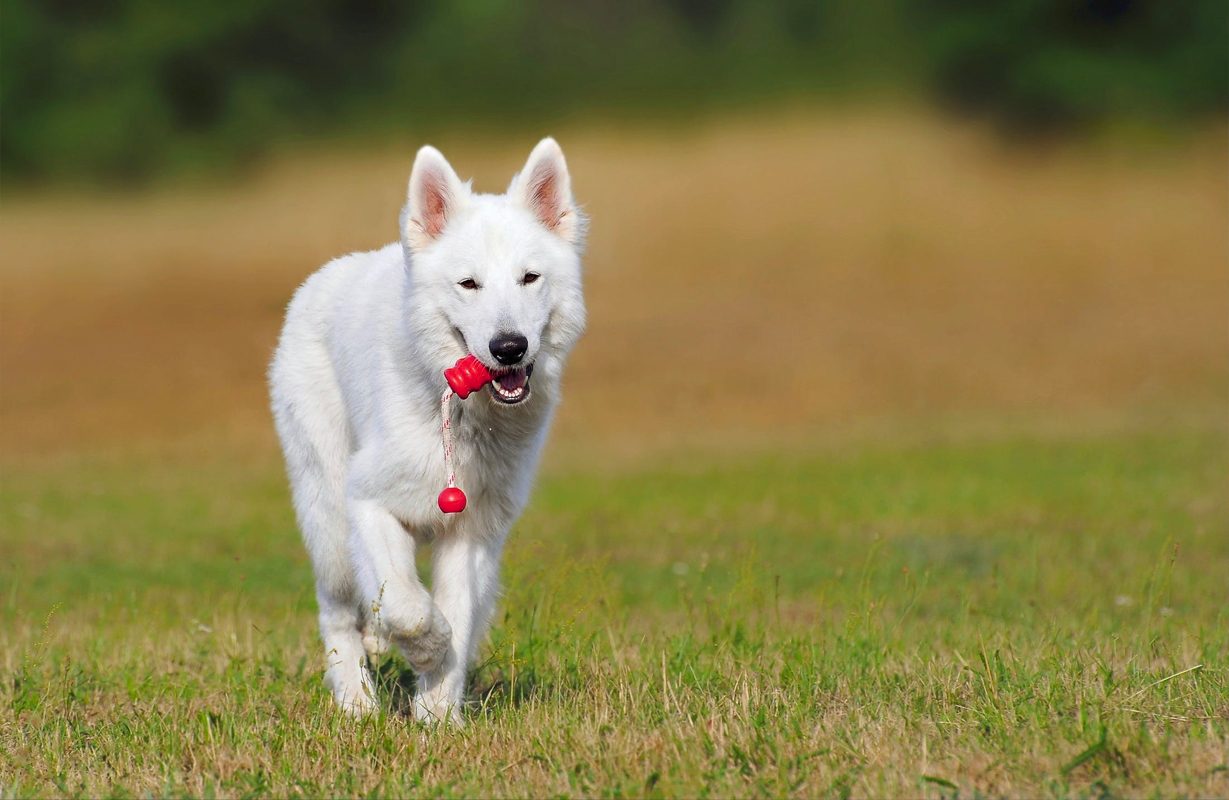
Now you’re ready to add movement. Place the toy just a few feet away and encourage your dog to go get it. The moment they pick it up, mark it, and reward. Once your dog is consistently picking up the toy, you can start introducing a verbal cue like “get it” or “fetch” and gradually increase the distance as they improve.
Keep throws short at first. A dog that gets it right from close range will generalize that success to longer distances much faster than one that’s been confused from the start.
This is where most retrieval attempts fall apart. The dog gets the toy, and that’s where their interest ends. The trick is making coming back to you more rewarding than anything else in the environment.
As soon as your dog turns toward you with the toy in their mouth, even if they haven’t taken a single step yet, click and treat. In the early stages, turning toward you matters more than completing the full return. Build from there. Each session, reward a slightly longer return until your dog is bringing the toy all the way back to your hand.
A retrieve isn’t finished until the toy is released. The best way to teach “drop it” is to swap the toy for another one rather than using food; dogs quickly figure out that dropping means losing the toy, so offering a second toy to swap keeps the game going and avoids a tug of war standoff.
Practice this consistently. Mark and reward the drop every time. Eventually, your dog will release on cue without needing the swap.
This one’s non-negotiable. Training sessions should be kept to five to ten minutes at a time, two or three times a day, and when you begin a new session, start a step or two back from where you ended previously to refresh the behavior. A tired or bored dog doesn’t learn; they just practice getting things wrong. Short, frequent sessions keep motivation high and progress steady.
It happens. Don’t push through it. If your dog quits mid-session, it usually means you’ve moved too fast or trained for too long; drop back to an earlier step, keep it easy, and always finish on a win. Ending on a success, even a small one, keeps your dog wanting to come back for more next time.
Retrieve training isn’t a one-afternoon project, and that’s actually a good thing. The back and forth of it, the small wins, the moments your dog finally gets it those are the sessions you’ll remember. Every dog picks this up at their own pace.
Some nail it in a week. Others take a month. Neither is wrong. What matters is that you stay consistent, keep it positive, and never train past the point where it’s still fun for both of you. Once your dog has a solid retrieve, the applications are endless: fetch in the yard, finding lost keys, even service-level tasks. Start with step one. The rest follows.


COPYRIGHT © PAWTICAL. ALL RIGHTS RESERVED.